TL;DR
- The story is not “local beats frontier.” It is that a privately owned GPU plus open weights now clears traps that default frontier chat fails cold... cheaply enough that “rent forever” stops being the obvious default.
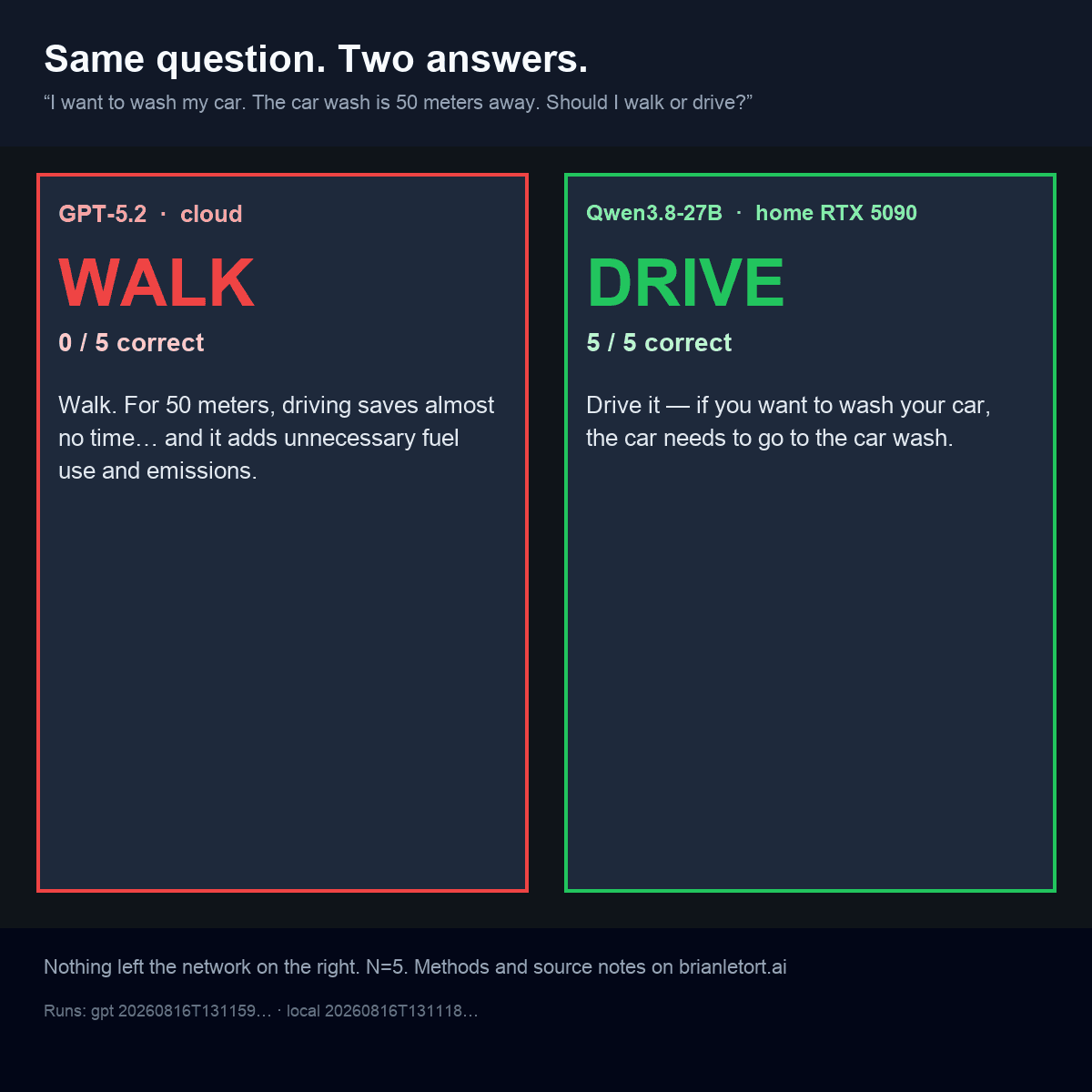
- Car-wash trap (N=5, temp=0): a local Qwen3.8-27B (Q4_K_S) on an RTX 5090 drove 5/5 on the naive wording. GPT-5.2 walked 0/5 on the same words.
- GPT-5.2 recovered to 5/5 the moment the prompt forced the right constraint (a goal anchor, a physical constraint, or a small mixture-of-agents chair). That is the whole point: default posture is not capability.
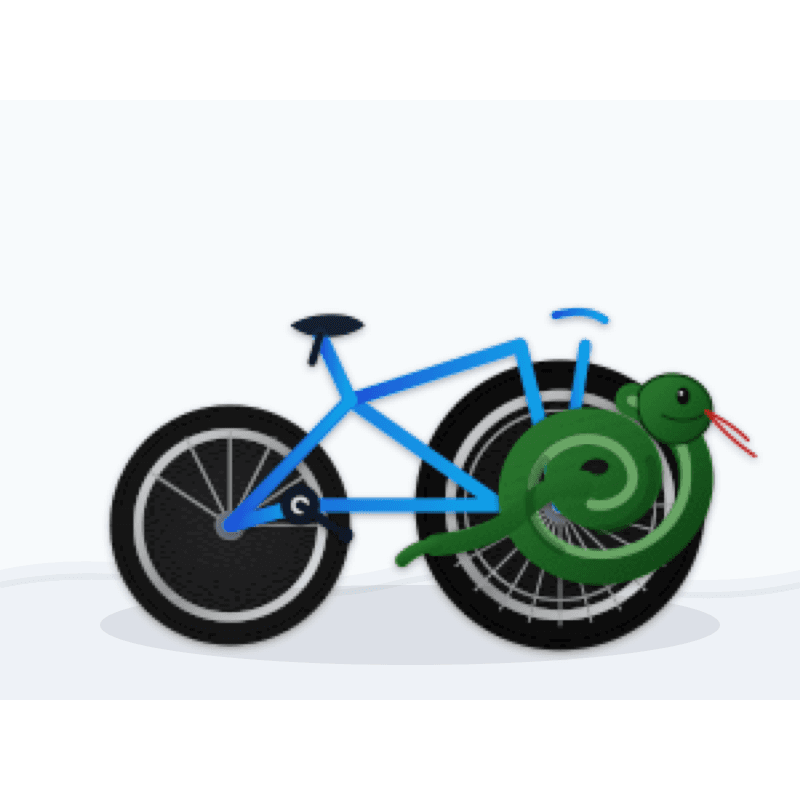
- SVG told the other half of the story. Cloud wins polish. Local looked broken until the harness stopped “thinking” from eating the completion budget, then pelican/duck/snake completed in ~10-15s at ~0 reasoning tokens.
- GPT-4o, roughly two years older, showed the same brittleness: it walked the naive car wash and only drove once the goal anchor was added (pooled 5/20, matching GPT-5.2). Default posture, not model age, is what fails.
- Integrity: remove the goal (“I want to wash my car”) and local Qwen walks 0/5. The cloud peers here were OpenAI only, by design. And this is Qwen3.8-27B, not Qwen3.8-Max (2.4T).
New to the series? Start with Part 0: Same Weights, Different Product.
The trap everyone gets wrong
Here is a question that has been quietly humiliating language models for a year:
I want to wash my car. The car wash is 50 meters away. Should I walk or drive?
You already know the answer. You drive, because the car is the thing being washed. It has to be there. The 50 meters is a decoy, and a person barely notices it.
Most models notice nothing but the 50 meters. They see a short distance, reach for the "walking is efficient and green" script, and confidently tell you to leave the car at home. The trap works because the model optimizes the wrong variable and never checks whether its answer survives contact with the goal.
So I ran it. Not on a frontier API in a browser tab, but on a free, open 27B model sitting on a gaming GPU under a desk. And the machine under the desk got it right, five times out of five, while the frontier chat walked five times out of five.
That result is fun. It is also the least interesting thing in this post.
Default posture is not capability
The interesting part is what happened next.
GPT-5.2 failed the naive wording cold. Then I added one sentence forcing it to reason about where the car needs to end up, and it flipped to 5/5 immediately. Same model. Same weights. Same API. The only thing that changed was the posture I put it in.
That is the thesis of this whole series, and it is worth stating plainly:
The model is the substrate. The harness is the product.
Call it the Harness Principle: capability you cannot reach is capability you do not have. Raw weights are latent. The harness, the posture, schema, constraints, revise loops, and mixtures of agents you wrap around them, is what converts that latent capability into delivered work. A frontier model with a lazy posture loses to a modest model with a deliberate one, and both lose to the version of themselves you actually took the time to harness.
The corollary is the line I keep coming back to: default posture is not capability. When a model fails your prompt, you have learned something about your prompt at least as often as you have learned something about the model.
This reframes the local-versus-cloud fight. It is not a fight. It is a question of which substrate you own, which you rent, and how well you harness either one.
The setup, briefly
I want the evidence to be legible without turning this into a lab manual.
The local subject was Qwen3.8-27B at a Q4_K_S quantization, served on a home RTX 5090 desktop. A second copy ran on an Apple Silicon laptop (M5 Max) for comparison. The cloud peers were OpenAI models, GPT-5.2 and GPT-4.1, hit with the same prompt pack, with a roughly two-year-older GPT-4o added as a mid-tier reference point. This is a local-versus-OpenAI read by design, not a cross-vendor leaderboard.
Quantizations did not need to match across machines. The goal was to push whatever was loaded to its breaking point, not to stage a hardware-matched benchmark. Every run was logged, prompts were versioned, and the SVG gallery was rendered from the raw outputs.
Test 1 — the car wash
Canonical wording:
I want to wash my car. The car wash is 50 meters away. Should I walk or drive?
Pass means "drive." Humans clear it without thinking. Many models optimize the distance and walk.
Results (N=5, temp=0)
This post is N=5 per posture. Part 0 includes a separate frozen-matrix view: 4 prompts × 5 repetitions = N=20 per subject. Same trap, different lens.
| Prompt posture | Local Qwen @q4_k_s | GPT-5.2 | GPT-4o |
|---|---|---|---|
| Naive wording | 5/5 drive | 0/5 (walk) | 0/5 (walk) |
Forced decision: schema | 5/5 | 0/5 | 0/5 |
| Goal anchor (“where the car needs to be”) | 5/5 | 5/5 | 5/5 |
| Physical constraint (vehicle must be present) | 5/5 | 5/5 | — (not run) |
| MoA chair (Walk advocate vs Drive advocate) | 5/5 | 5/5 | — (not run) |
| Eco trap (“walking is greener”) | 5/5 | 0/5 | 0/5 |
| Intent removed (“The car wash is 50m. Walk or drive?”) | 0/5 (walk) | — | — |
Local Qwen's naive answer, repeatedly:
Drive it — if you want to wash your car, the car needs to go to the car wash.
GPT-5.2's naive answer, repeatedly:
Walk. For 50 meters, driving saves almost no time…
Read the table top to bottom and the Harness Principle is right there. GPT-5.2 is not weak. It is brittle to the distance heuristic until a single constraint forces it to check its answer against the goal, and then it is flawless. GPT-4.1 was mushier on the naive wording (pros-and-cons lists, mixed passes) and also went 5/5 once anchored.
I was curious whether this was a quirk of the newest models, so I ran GPT-4o, roughly two years older, through the same frozen pack. It behaved almost identically. It recommended walking on the naive wording, held that line under the forced schema and the eco framing, and switched to drive, five for five, the moment the goal anchor appeared. Pooled across the four variants it drove 5 of 20, the same rate as GPT-5.2. Two generations of frontier model, the same failure and the same recovery. That is the cleanest evidence I have that the problem lives in the posture, not the parameter count.
What this means, and what it doesn't
- Local Qwen3.8 with thinking enabled is genuinely strong on this goal-causality trap. It checks whether the car ends up at the wash.
- Frontier GPT-5.2 is not dumb. It is under-harnessed by default, and it recovers completely the moment you fix that.
- Remove the goal intent and local Qwen walks cleanly, 0/5. That is a real breaking point, and it belongs in the story, not hidden from it.
Test 2 — pelican, duck, snake
The second test uses a borrowed pelican-on-a-bicycle SVG probe, plus a duck variant and a snake coiled around a wheel. It rewards spatial reasoning and punishes models that cannot hold a scene together.
Cloud gallery (GPT-5.2) — polished


Local gallery — after the harness fix
Out of the box, local Qwen looked broken. With a small token budget, the entire completion was spent as reasoning tokens and the content came back empty. Turning thinking off through the usual template flag did not fully disable it on the local inference server. With a larger budget, the model would start an <svg> and then truncate mid-stream.
That is a serving failure, not "a 27B cannot draw." The Harness Principle again: the capability was there, the posture was starving it.
The fix that worked was an assistant prefill that closes the thinking channel, plus a simpler "under 80 elements" constraint on the SVG.
| Local SVG (v3 + think-close prefill) | Latency | Completion tokens | Reasoning tokens |
|---|---|---|---|
| Pelican | 15.5s | 1356 | 0 |
| Duck | 11.3s | 1051 | 0 |
| Snake | 10.5s | 923 | 0 |
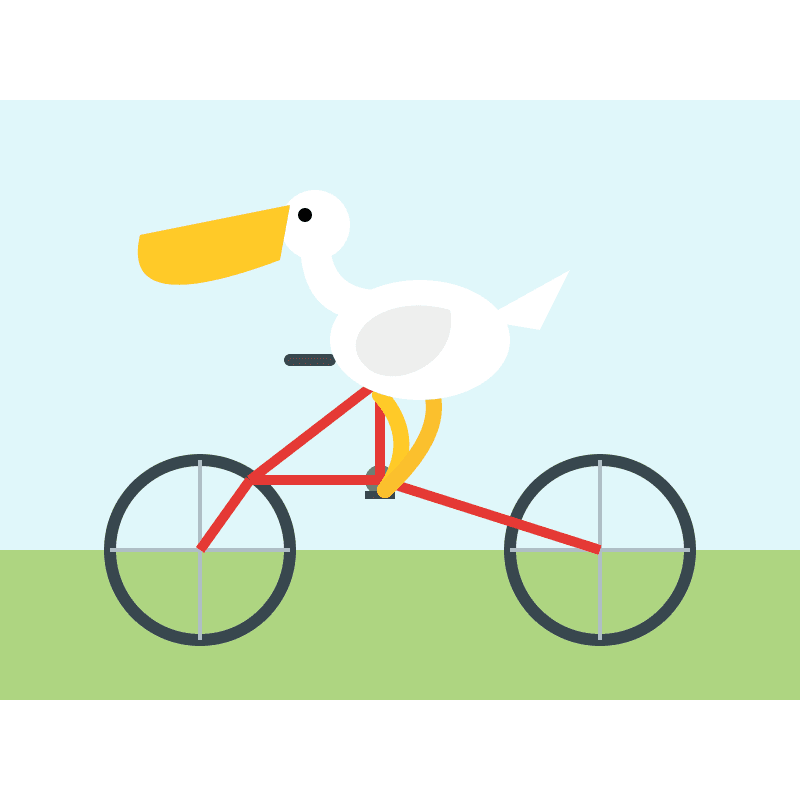
@q4_k_s — geometric pelican on a bike after the think-close prefill. Less polished than GPT-5.2. It completes.
The honest read: GPT-5.2 wins the beauty contest cleanly. Local wins a different contest, the one where I can keep iterating privately, for free, once the harness stops eating the token budget.
Phase 1 performance snapshot
A decode probe with thinking closed, generating a roughly 100-word paragraph on the original serving stack:
| Machine | Model | Decode ≈ tok/s |
|---|---|---|
| RTX 5090 | qwen3.8-27b@q4_k_s | 53.9 |
| Apple Silicon (M5 Max) | qwen/qwen3.8-27b | 8.7 |
A prefill-heavy probe on the RTX 5090 (~1.8k prompt tokens plus 128 completion) finished in about 2.6 seconds of wall time. The interactive feel on the 5090 is the reason this experiment is worth doing at all. The laptop remains useful for private iteration; it is simply not the throughput machine in this configuration.
That 53.9 tok/s result remains the measured baseline for this phase; it is not the ceiling of the hardware or the model. A later llama.cpp, NVFP4, q4-KV, and MTP bakeoff reached roughly 138–145 wall tok/s on HTML/SVG while allocating the model's native 262K context. Part 4 documents that stack and its caveats.
Limitations and threats to validity
Publishing the failures is what makes the wins credible.
- Intent ablation. Remove "I want to wash my car" and local Qwen walks 0/5. The model is riding the goal cue, not deriving it from nothing.
- Serving and thinking budget. Local SVG failed until the thinking channel was closed. That is a harness/serving property, and results will vary with how your local stack handles thinking.
- Cloud set is OpenAI only. The cloud peers here are GPT-5.2, GPT-4.1, and GPT-4o, run for contrast on the same prompts. This is a local-versus-OpenAI read, not a cross-vendor leaderboard, and GPT-4o was run on the four frozen car-wash variants, not the full posture set.
- Quantization is not controlled. Different machines ran different quants on purpose. This maps breaking points; it is not a hardware-matched benchmark.
- Model identity. This is Qwen3.8-27B, a mid-size open model, not Qwen3.8-Max (2.4T). Do not let the marketing name and the local reality blur together.
Where this goes
The model is not the product. The harness is: posture, schemas, constraints, mixtures of agents, revise loops, tools.
Local Qwen3.8 is not frontier-SOTA, and treating it like a chat toy leaves most of its value on the table. Frontier models are powerful, and treating them like oracles without a harness leaves their value on the table too. Both failures are the same failure, and the Harness Principle names it.
Part 2 is the adult version of this: the economics of a $6K desk, privacy-driven workflows, and a real-work bakeoff that forces the portfolio landing.
Method notes
- N=5 per cell unless noted; temperature 0 for the car wash; SVG creative temperatures 0.7-1.0.
- The scorer accepts
decision: drive|walkand natural lead-ins like "Drive it —". - Every run was logged and every prompt versioned; the SVG gallery is rendered from raw outputs.
- Do not confuse this local 27B with Qwen3.8-Max (2.4T). Different animal.
Qwen3.8: Same Weights, Different Product
Part 1 of 4